
Sovereignty, Stewardship, and Resilience: Summary Report
Framing & Purpose
Tribal Nations play a critical role in stewarding land, water, food, and energy systems that sustain their communities and support ecological health. Tribal sovereignty and self-determination provide a foundation for developing solutions that protect natural and cultural resources, strengthen economies, and build resilience to climate change. Yet shifting federal priorities, reduced funding, and growing environmental pressures are creating new challenges for Tribal communities.
These disruptions also present opportunities to strengthen Tribal leadership and expand self-governance. There is an opportunity to develop innovative approaches to land management, conservation finance, food sovereignty, and energy resilience. Realizing this potential requires sustained investment in Tribal capacity, such as legal and technical expertise, accessible financing, and partnerships that respect Tribal authority.
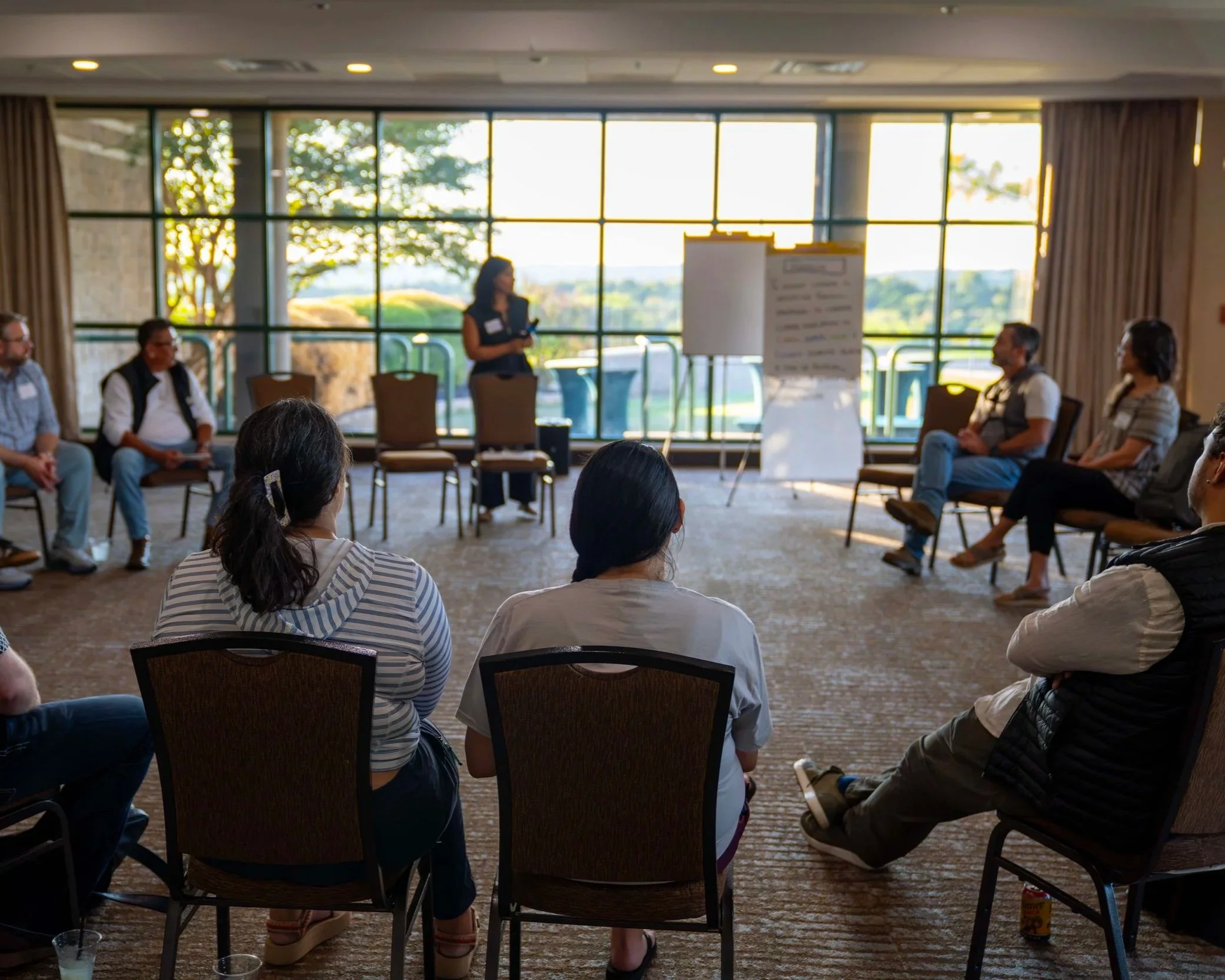
In October 2026, VCI convened Tribal leaders and partners to identify practical strategies to strengthen Tribal sovereignty, advance self-determination, and address climate disruption to land, water, food, and energy systems during a time of political, ecological, and institutional disequilibrium.
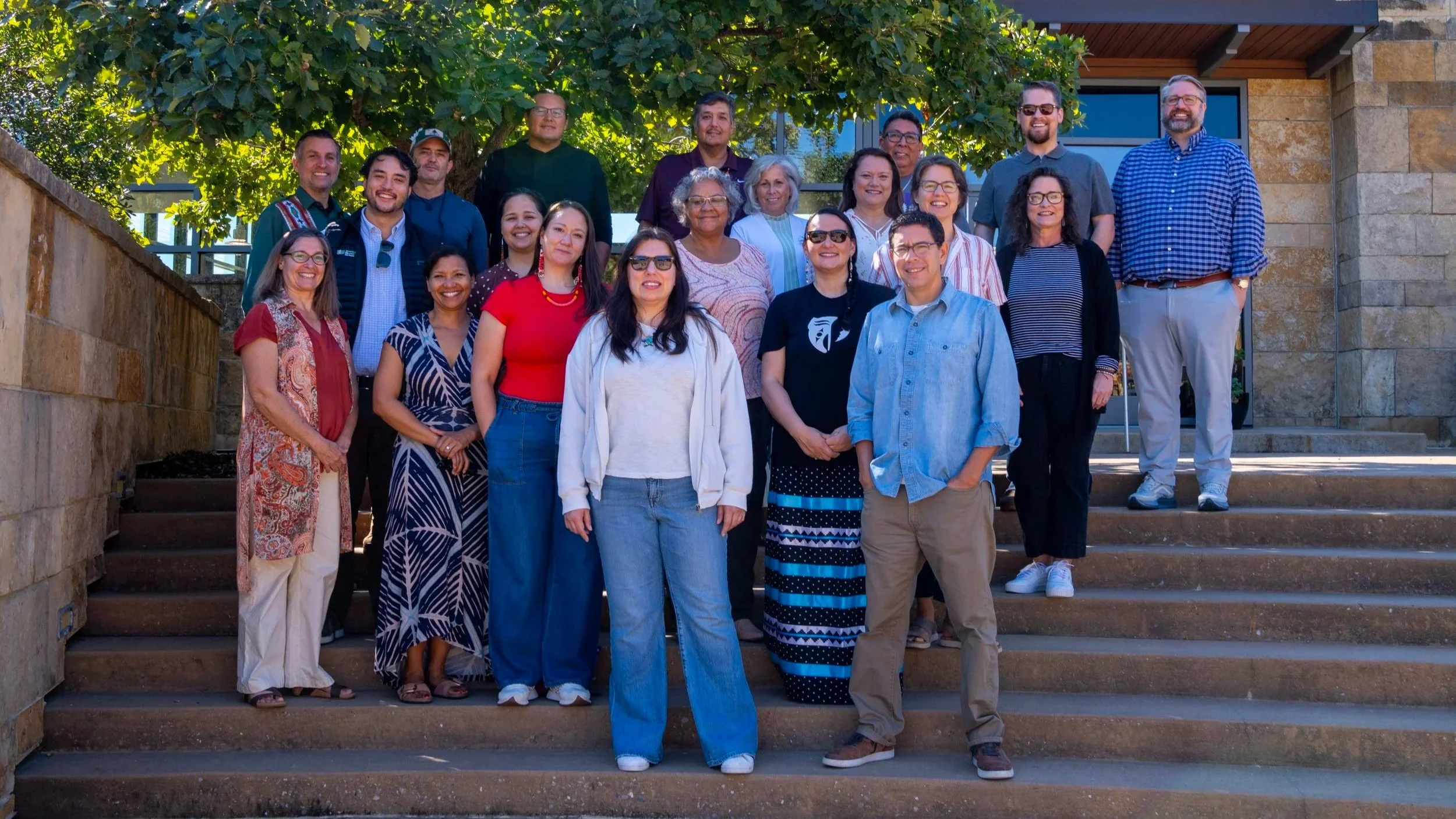
The convening brought together leaders from 16 Tribes with backgrounds in Indian law, restoration, reforestation, clean energy, and Tribal governance. Together the group explored ways to exercise existing Tribal authorities. They sought to leverage co-stewardship/co-management opportunities, enhance the Native workforce, and educate philanthropy. They also focused on ways to invest in the cultural and natural value of tribal lands through innovative finance, align on policy priorities, and strengthen Tribal-led initiatives and collaboration.
Beyond identifying practical strategies, participants spent time building relationships, sharing knowledge, and strengthening connections across Indian Country. The relationships formed and strengthened during the convening provide a foundation for continued collaboration to advance lasting sovereignty, resilience, and self-determination.

Key Considerations
Throughout the convening, participants identified several factors that can help Tribes exercise sovereignty and self-determination to address climate disruption.
-
Strategies for land stewardship, finance, policy, and economic development should be Tribally led and grounded in cultural values and community priorities. Participants challenged conventional definitions of conservation and emphasized the importance of Tribal authority, Indigenous knowledge, and self-determination. As one participant noted, “because of their sovereignty, Tribes can do way more on public lands and their own lands than NGOs and private individuals can do.” Realizing this potential requires Tribes to “flex the sovereign muscle” by building the capacity to evaluate opportunities, navigate partnerships, negotiate contracts, and make informed decisions that advance their priorities.
-
Stronger networks and information sharing can amplify Tribal priorities, reduce reliance on outside organizations, and advance shared goals. Participants noted that organizations often work in silos, with one reflecting that “even the organizations we come from have sliced up the territory.” Without greater collaboration, another participant worried, Indian Country may struggle to present “a united front” to advance its priorities. Participants saw an opportunity to connect organizations, networks, and expertise to coordinate efforts and share funding, technical capacity, and resources. They also emphasized mentorship, succession planning, and youth leadership to strengthen these connections and sustain Tribal leadership across generations.
-
Participants explored how Tribes can use shifts in federal funding, structure or lack thereof, and under-leveraged laws to advance Tribal-led initiatives. One participant described how a system that had long prevented Tribes from making progress had begun to break down, while another saw the potential for “deregulation to open it up for Tribes to be more innovative.” As federal agencies reduce their presence on some public lands, Tribes may have opportunities to step into management roles and demonstrate the effectiveness of Tribal-led stewardship. However, participants also cautioned against assuming these changes would produce lasting progress, noting that the system has historically failed to serve Tribal interests and that Tribes will continue to face a “struggle with whoever is in office.”
-
Participants emphasized drawing strength from relationships, community, and ancestral teachings to navigate political and ecological uncertainty and address climate disruption. One participant reflected on “having grown up in Native communities, [and being taught] to not let that fear seep into you.” Several participants expressed that their ancestors had prepared them for this moment, encouraging others to approach this changing time with courage and optimism. One recognized the current moment as “a really special time period.” Another reflected that “prophetically we’re in a day of reckoning,” where Tribal teachings can become solutions to today’s challenges. Together, these perspectives highlighted how cultural knowledge, intergenerational wisdom, and strong relationships can serve as a source of strength, hope, and strategic thinking to use this time as an opportunity for leadership and action.
-
Participants emphasized the need for philanthropy to recognize Tribal sovereignty, and invest directly in Tribal-led priorities. Funders often support NGOs to carry out work that Tribes are already leading, sometimes leaving Tribes with limited funding despite carrying much of the responsibility. Participants urged funders to recognize Tribal stewardship as conservation, even when it does not fit conventional frameworks and to better understand the unique authorities Tribes can exercise over their lands and public lands. As one participant explained, “You know one Tribe, you know one Tribe”—underscoring that each Tribe has distinct capabilities, priorities, needs, and solutions. Participants called for more flexible, sustained support that spans general operations, financing, technical assistance, and disaster resilience. Supporting Tribal visions and strategies directly is essential to strengthening Tribal capacity and advancing resilience across land, water, energy, and food systems.
Overcoming Challenges
Throughout the convening, participants identified several challenges that hinder Tribes ability to address climate disruption to land, water, food, and energy systems throughout Indian Country.
Federal policy uncertainty and instability: Funding delays and clawbacks, agency restructuring, reduced staffing, weakened environmental protections, and limited consultation create uncertainty for Tribal programs and long-term planning.
Unequal capacity and resources across Tribes: Tribes differ in staffing, funding, geography, political circumstances, and organizational infrastructure, meaning that opportunities and challenges are not experienced equally.
Fragmented funding and investment pathways: Existing resources are often difficult to navigate or coordinate, while conventional philanthropic approaches may not adequately recognize Tribal sovereignty or support Tribal institutional capacity.
Complex legal and administrative systems: Land return, probate, land transactions, federal land management authorities, and related legal requirements can create significant barriers when Tribes lack accessible, specialized support.
Limited Tribal Capacity and Workforce Infrastructure: Tribes need sustained investment to train and retain skilled workers, strengthen research and policy capacity, support regional organizations, and coordinate emergency responses to climate-related disruptions.
Outcomes and Action Items
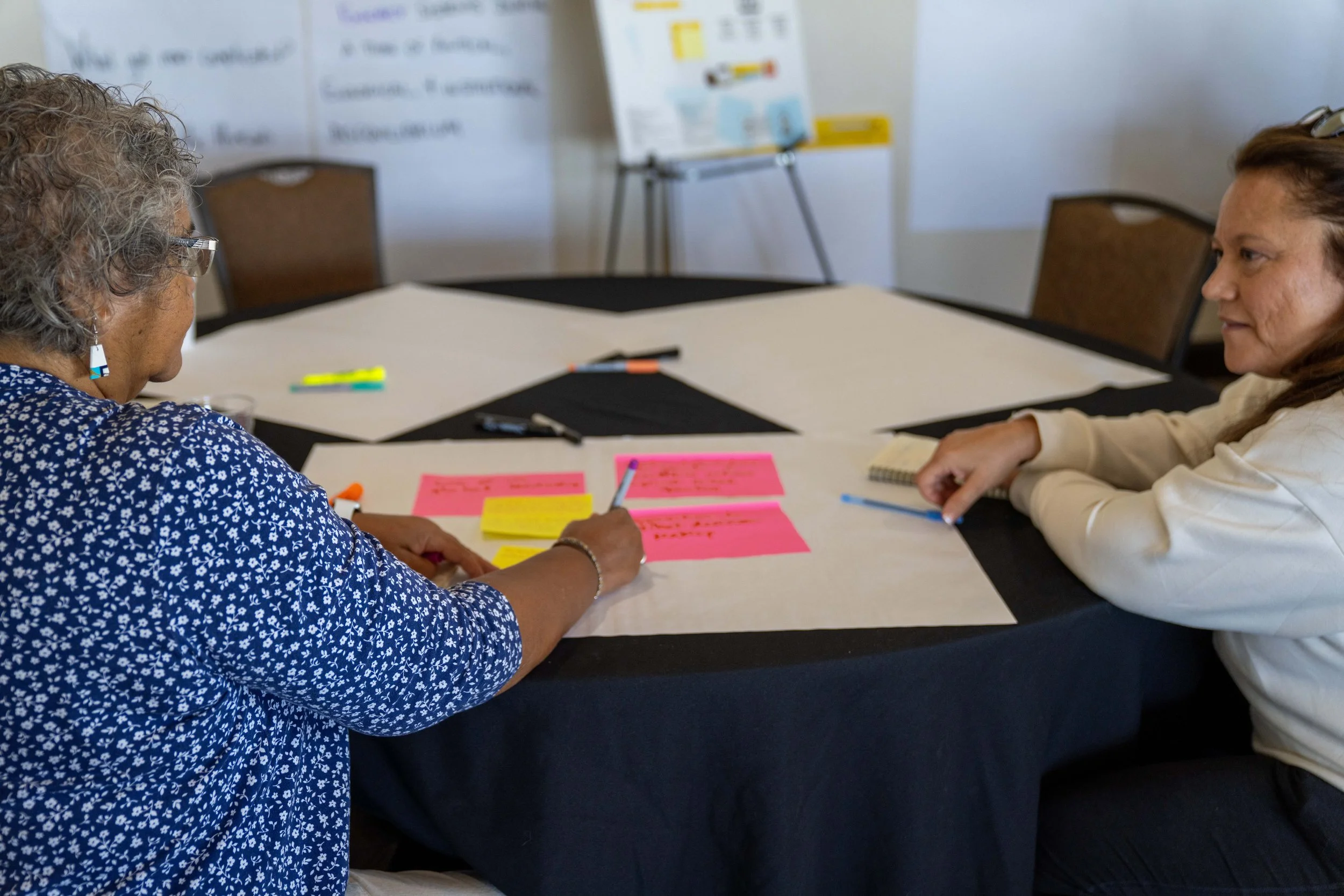
The participants ultimately created four distinct but interconnected initiatives to support Tribal sovereignty and resilience:
Workforce Fellowship: Create a program to support Native students and early career professionals looking to become involved in climate-related work serving Indian Country.
The Land Back Book: Develop a resource outlining ways Tribes can exercise stewardship and leadership on the landscape, including land management, co-stewardship/co-management contracts, and "land back" agreements — transfers of land from non-Native entities back to Tribes.
Policy Framework: Bring together Native leaders and communities to identify shared policy priorities and develop a transition plan for 2028 for Indian Country for land, water, energy, and natural resource issues.
Native Finance Platform and Exchange: Create a Tribal Nation finance platform and exchange in order to bring together public-private philanthropy globally that reflects nature's values and is grounded in Tribal sovereignty.
Looking Forward
Looking forward, participants expressed enthusiasm for the potential impact of the four areas of work. As one participant noted, “collectively, all four of the plans would make a huge difference in Indian Country and across the United States.” Another observed that the priorities naturally aligned around “financing in Indian Country, jobs in Indian Country, federal Indian policy, and land back.”
Seen together, these interconnected areas of work offer a shared vision for advancing Tribal sovereignty, strengthening capacity, and supporting Native-led solutions. Participants recognized opportunities for the efforts to reinforce one another, building connections across workforce development, policy, land stewardship, and finance.
Beyond the initiatives, participants left with strengthened relationships, a deeper understanding of shared priorities, and renewed momentum for collaboration across Indian Country.
VCI thanks all participants for their time, insight, and contributions to these important conversations.